Building a GoHighLevel Automation Engine for an AI Video Agency
A founder building an AI video agency had a clear offer — high-quality video ads, explainers, and brand films produced with AI — and a rough website drafted in Claude Design. What he did not have was the engine behind the business. The front end looked promising but was loaded with insecure code and broken pieces. The forms looked good but were not connected to anything. There was no CRM, no automation, no affiliate program, and no clear path from a visitor submitting a form to a paying client moving through onboarding.
As a full-stack developer and automation specialist, I rebuilt the site in Next.js, built a secure backend, and turned GoHighLevel into the operating system for the entire business. The result was a working GoHighLevel automation engine that handled lead capture, pipeline movement, affiliate management, contracts, booking links, and internal notifications without the founder lifting a finger. This case study breaks down how the AI video agency went from a broken draft to a CRM automation and affiliate management system in four weeks.
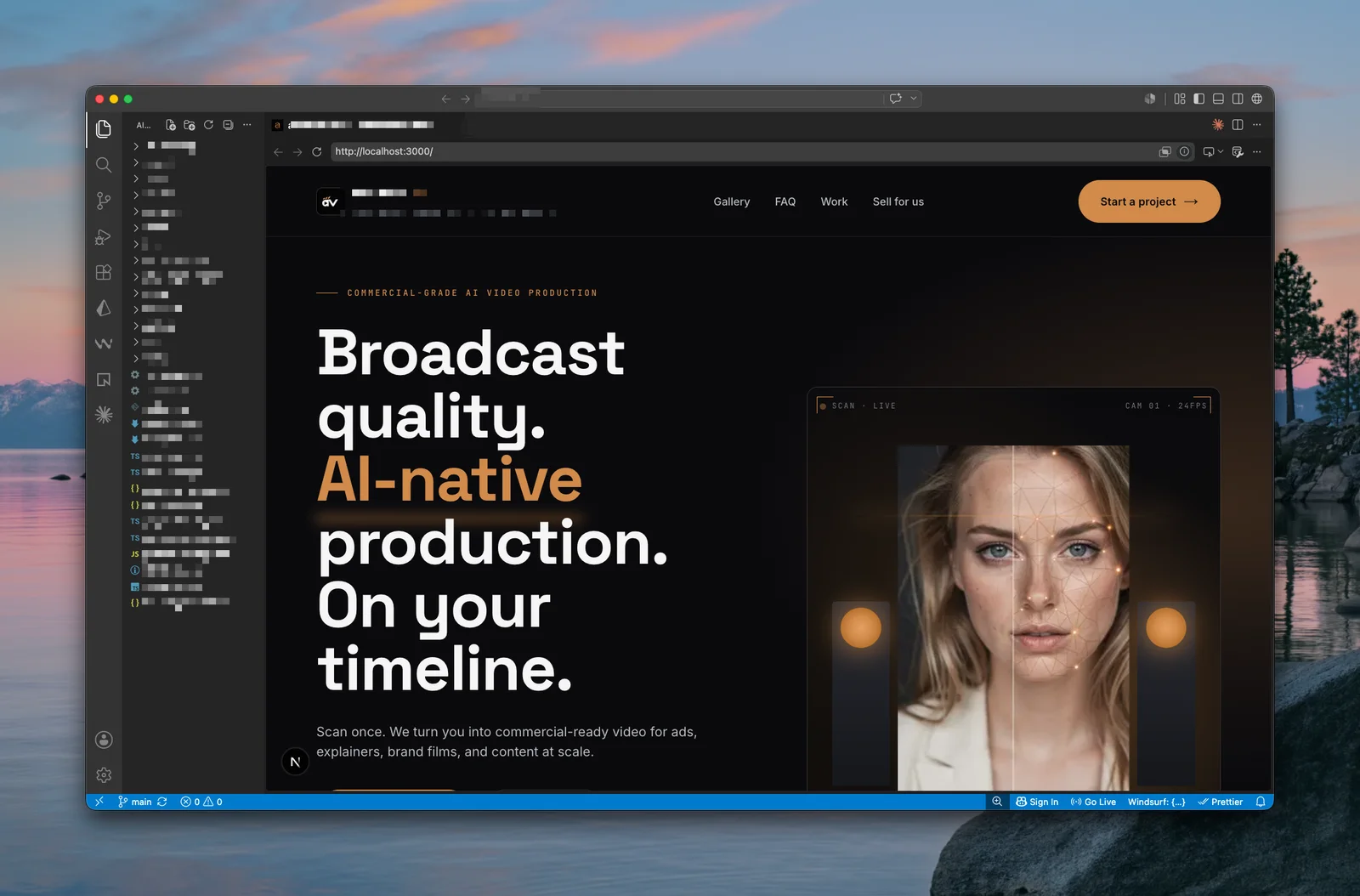
The rebuilt Next.js front end keeps the original design while replacing insecure code and connecting every form to the backend.
A Broken Front End and a Missing GoHighLevel Automation Engine
The real problem was that the business existed only as a front end. Every critical operation — capturing a lead, storing data safely, triggering follow-ups, enrolling affiliates, sending contracts — depended on manual work or was not happening at all. The website was a shell, and the founder was about to pitch a market that would expect a professional, instant response.
- Insecure, broken front end: The original Claude-built files contained sloppy code, missing error handling, and visual bugs that would break on live deployment.
- Disconnected forms: The custom forms were central to the brand identity, but they submitted nowhere. There was no database, no CRM sync, no confirmation logic.
- No backend infrastructure: Without a backend, the site could not talk to GoHighLevel reliably, could not store backup records, and could not support future features the founder already wanted.
- No automation pipeline: A lead could fill out a form and disappear into an email inbox. There was no pipeline stage, no assignment logic, no booking link, no contract flow.
- No affiliate system ready: The founder planned to recruit affiliates, but there was no campaign structure, no tracking, no enrollment workflow.
- MVP pressure: The founder wanted to start pitching immediately. The solution had to be fast, stable, and expandable without a total rebuild.
What It Cost to Do Nothing
Launching without the backend engine would have wasted the founder’s marketing spend and damaged his credibility before the business had a chance:
- Lost leads: Visitors who submitted forms would receive no structured follow-up. Interested prospects would cool off and move on.
- Manual chaos: Every form submission would land in an inbox and require the founder to copy details into GoHighLevel by hand, assign stages, send booking links, and chase contracts.
- Affiliate program failure: Affiliates expect instant tracking, clear dashboards, and automated enrollment. A manual process would kill recruitment.
- Reputation risk: A broken or slow response experience makes an AI agency look amateur. For a founder selling premium video content, first impressions are everything.
- Blocked phase 2: Without clean architecture from day one, every new feature would require tearing apart the original draft.
Technical Barriers That Made This Hard
- Preserving custom form design: The founder refused to use standard GoHighLevel embed forms because they clashed with the site aesthetic. I had to build custom forms that looked identical but submitted to a controlled backend.
- GHL integration without native flexibility: GoHighLevel’s Incoming Webhook trigger could have handled form submissions, but it would not support the broader requirements: custom validation, backup database storage, future non-GHL features, and precise control over contact creation.
- Staggered, incomplete handoff: The founder sent files in pieces. I had to reconstruct the design intent, fix broken code, and make the site production-ready.
- CI/CD from scratch: The site needed automated deployment to Vercel so updates could ship safely without manual uploads.
- MVP scope vs. future growth: The system had to launch fast but stay clean enough to support phase 2 features like client portals, project dashboards, and advanced affiliate reporting.
Auditing the AI Video Agency Before Building the GoHighLevel Automation Engine
Before writing any automation, I audited every layer of what the founder had:
- Front-end review: I inspected the original files for broken components, insecure patterns, missing assets, and mobile responsiveness issues.
- Form mapping: I identified every form on the site, the data each collected, and where that data needed to land in GoHighLevel.
- GHL sub-account planning: I designed the sub-account structure around the founder’s actual sales process: lead capture, qualification, booking, contract, onboarding, and affiliate recruitment.
- Pipeline design: I mapped the customer journey to concrete pipeline stages the founder could read and act on.
- Affiliate workflow planning: I defined how affiliates would be created, assigned to campaigns, and notified when their referrals moved.
What I Built and Why
Rebuilt Front End in Next.js
I reconstructed the website in Next.js with TypeScript and Tailwind CSS. The goal was to keep the visual identity the founder liked while replacing the insecure code and making every interaction production-ready.
- Custom forms preserved: Every form matches the original design but submits to the custom backend with validation, error handling, and success states.
- Mobile responsiveness: The layout now works cleanly across devices.
- Performance: Static and server-rendered pages load fast on Vercel’s edge network.
- CI/CD pipeline: Changes push through Git and deploy automatically.
Custom Backend for GoHighLevel and Backup Storage
I built a separate backend using Next.js API routes, PostgreSQL, and Prisma. This gave the founder full control over his data and logic.
- Secure form handling: Submissions are validated, sanitized, and logged before any external API call.
- GoHighLevel contact and pipeline sync: Every submission creates or updates a contact and moves it to the correct pipeline stage.
- Backup database: PostgreSQL stores every submission independently, so no lead is ever lost because of an API outage.
- Future-proof architecture: When the founder needs features GoHighLevel does not support, the backend can handle them without rebuilding the front end.
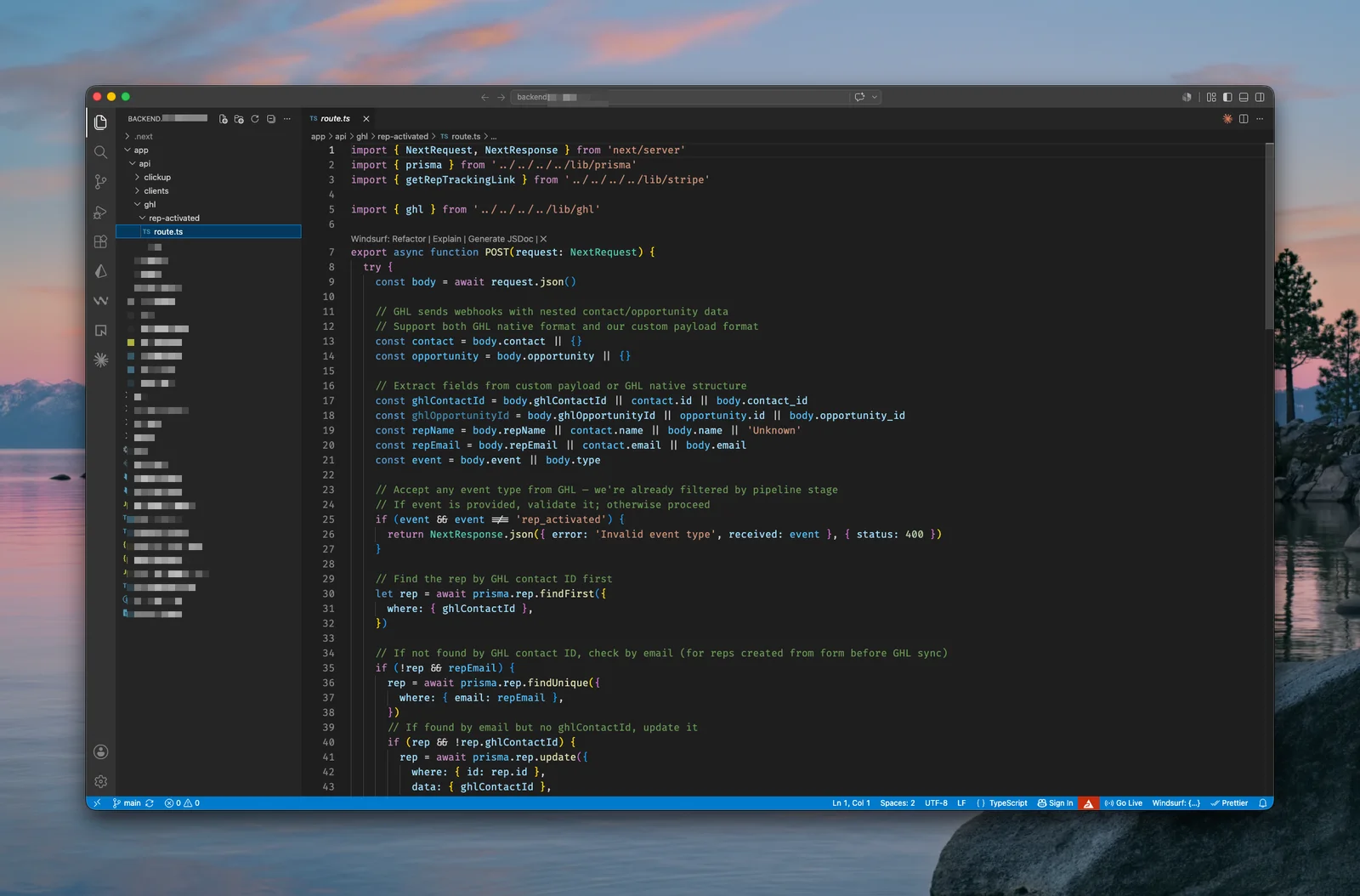
The custom backend provides a backup system and full control over how form data flows into GoHighLevel.
GoHighLevel Sub-Account as CRM and Affiliate Manager
I built the GoHighLevel sub-account from scratch to act as the central operating system for the business.
- CRM: Contacts, companies, and opportunities are organized around the founder’s actual sales process.
- Pipelines: Custom stages reflect the journey from lead to booked call to signed contract to onboarded client.
- Workflow automations: GHL workflows send booking links, contracts, internal notifications, and lead assignments automatically.
- Affiliate campaigns: I configured campaigns so affiliates can be enrolled, tracked, and rewarded as their referrals convert.
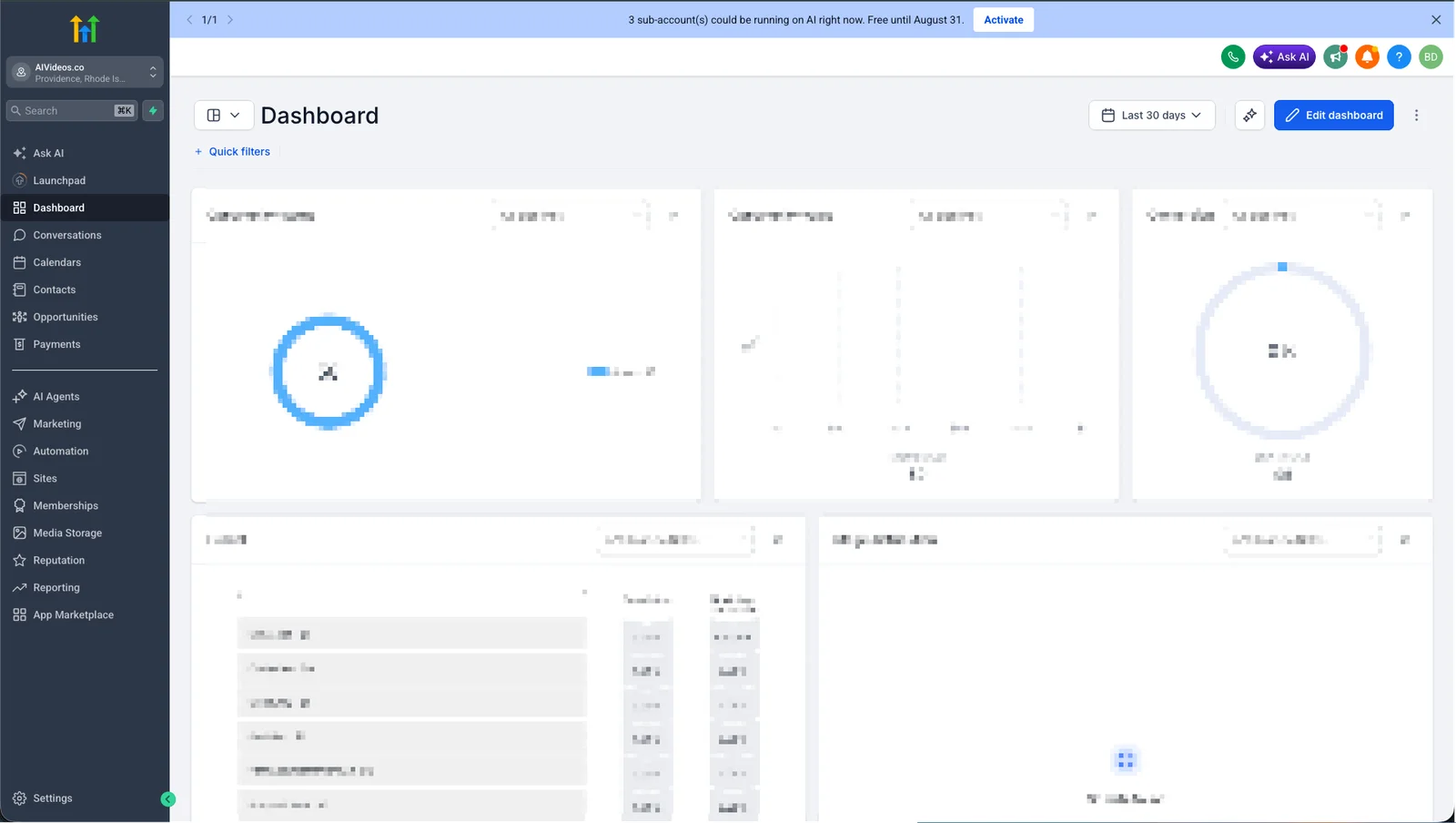
The GoHighLevel sub-account was built from the ground up as the CRM, affiliate manager, and automation hub.
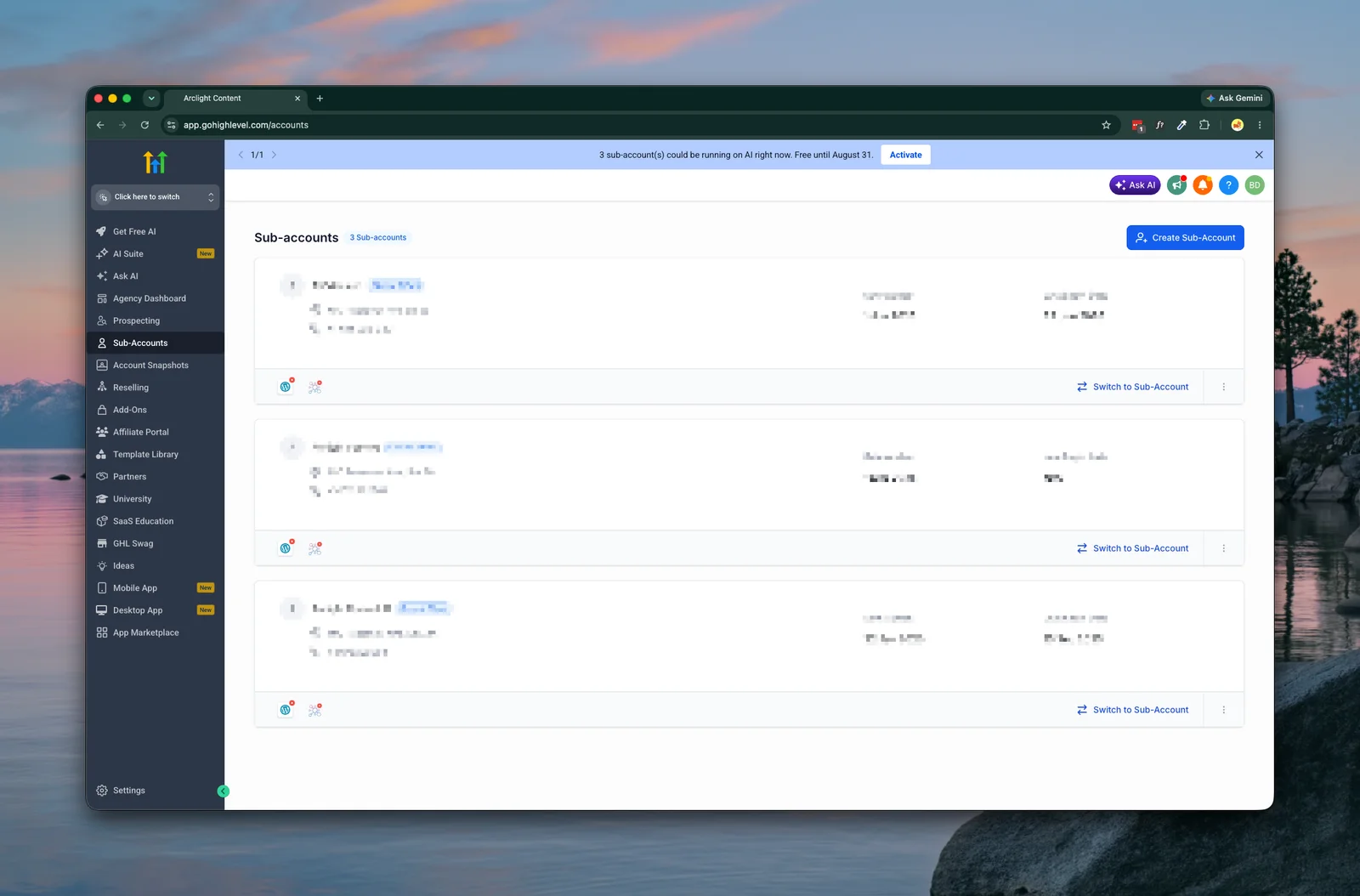
Location settings and team structure configured for the agency’s sales and affiliate operations.
Pipelines and Stages
I created pipelines that match the founder’s sales motion:
- Lead captured
- Qualified
- Booking sent
- Booked
- Contract sent
- Contract signed
- Onboarding
- Active client
Each stage triggers the next action automatically, so the founder never has to remember what comes next.
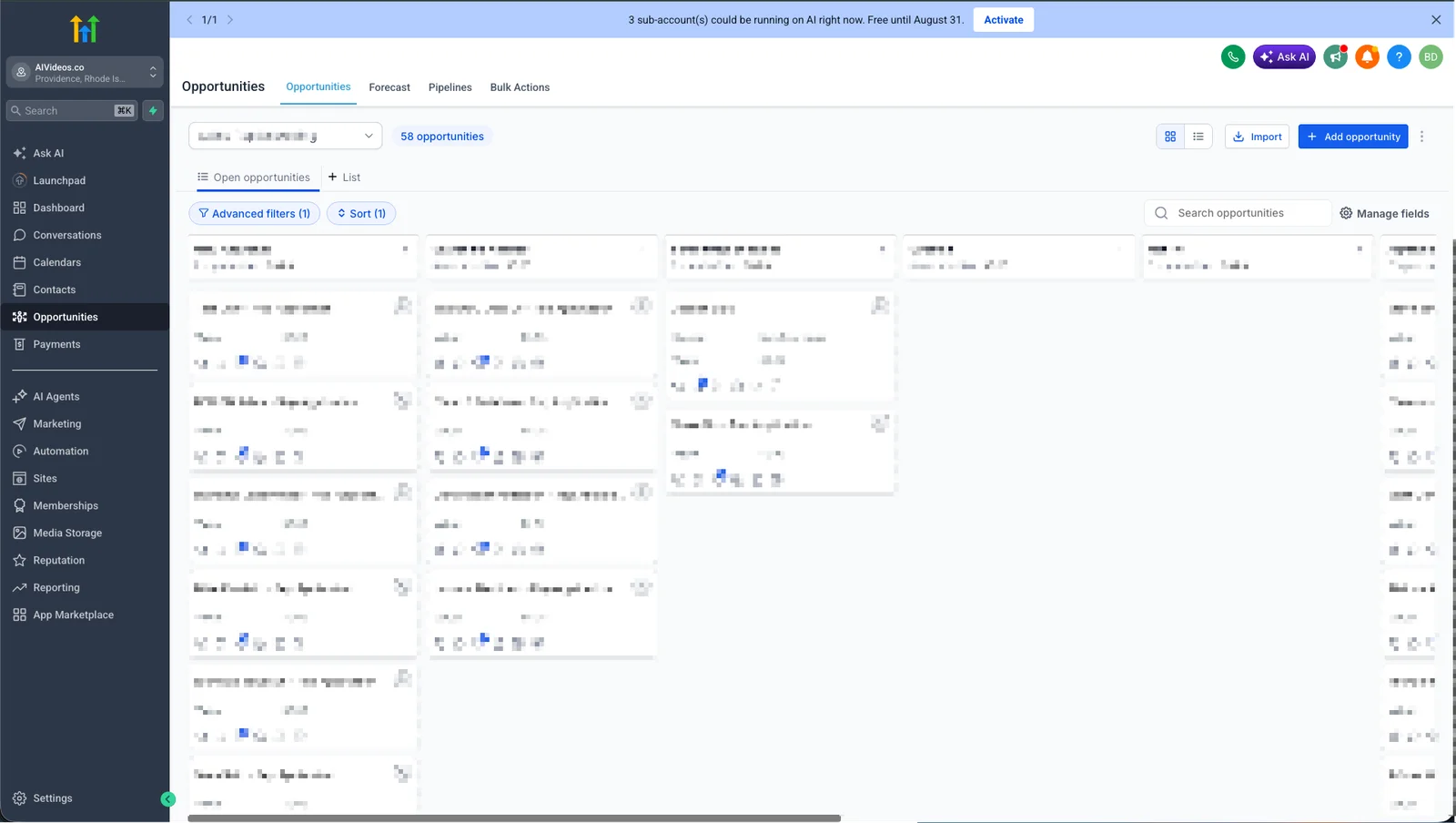
Custom GoHighLevel pipelines map the full customer journey from first submission to active client.
Workflow Automations
I built a set of GHL workflows that handle the repetitive work:
- Booking link delivery: Qualified leads receive a calendar link automatically.
- Contract and agreement delivery: Once booked, the prospect receives fillable contracts.
- Internal notifications: The founder and team get alerted when a lead moves to a high-value stage.
- Lead assignment: New leads are assigned to the right team member based on source and stage.
- Affiliate enrollment: Referrals are tied to the correct affiliate campaign and contact.
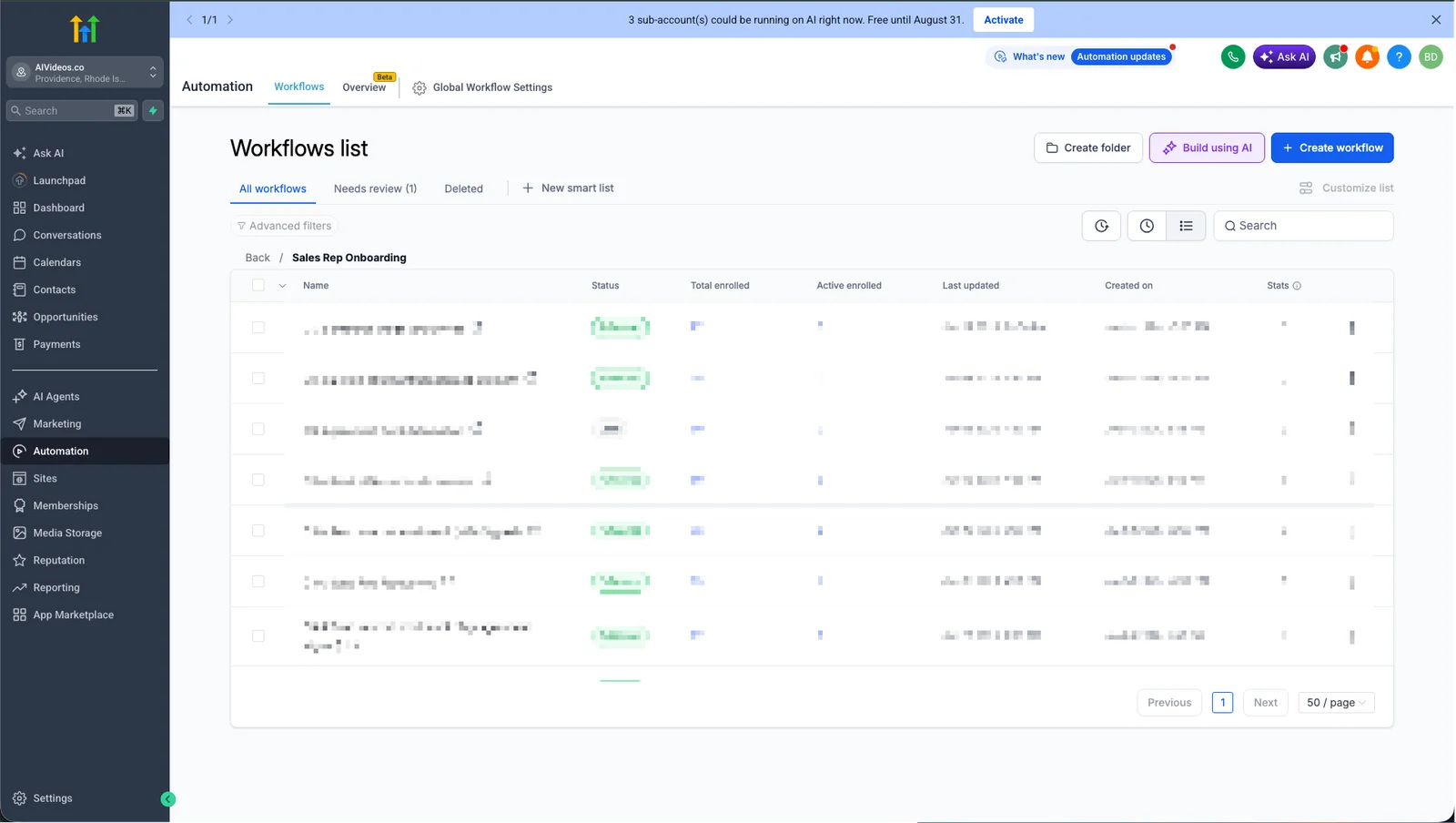
GoHighLevel workflows power booking links, contracts, internal alerts, lead assignment, and affiliate enrollment.
Affiliate Campaigns
I set up affiliate campaigns inside GoHighLevel so the founder can recruit partners and track their performance without managing spreadsheets.
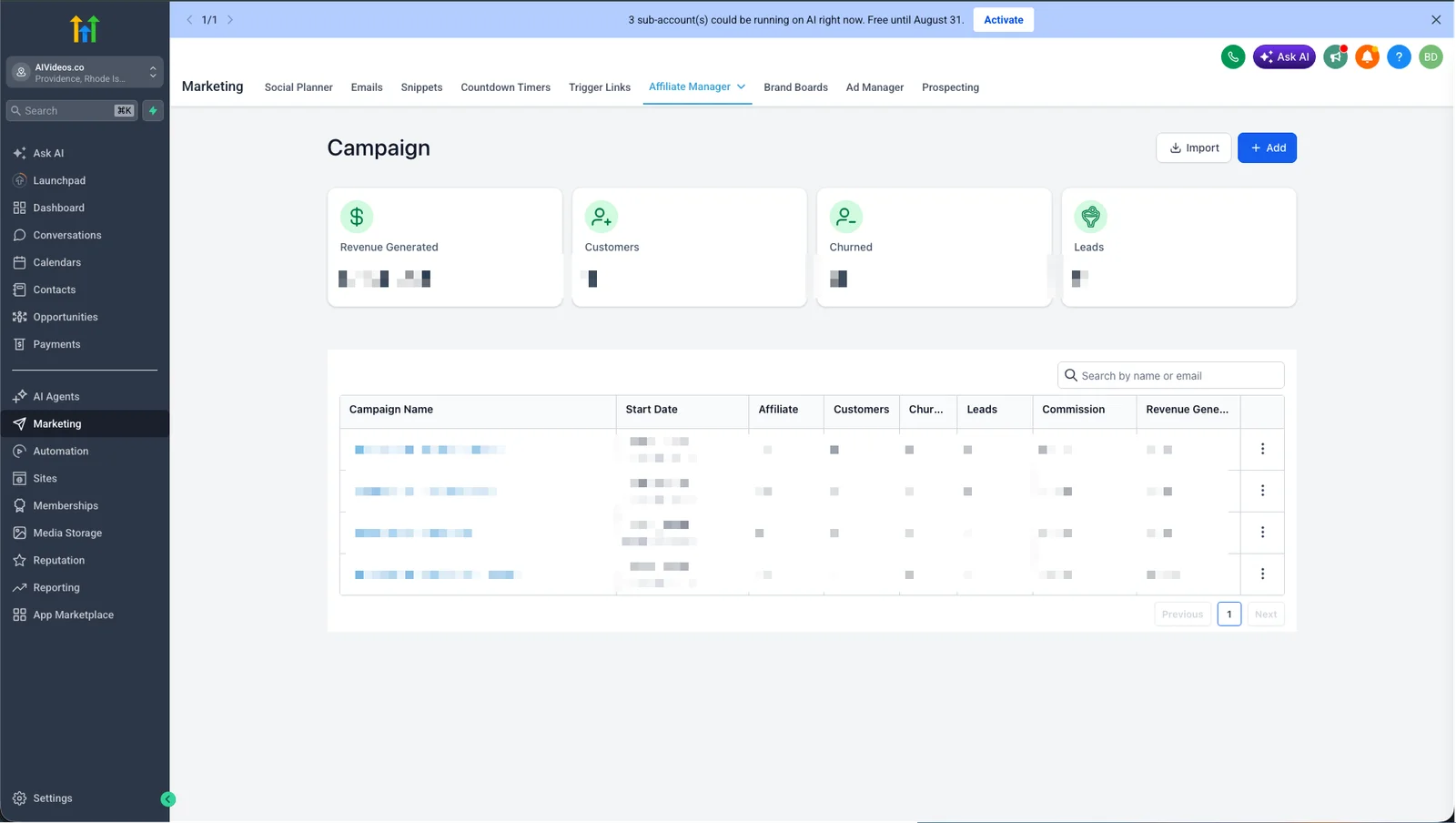
Affiliate campaigns configured inside GoHighLevel to support partner recruitment and referral tracking.
Connecting Technical Decisions to Business Outcomes
Technical action: I chose Next.js for the front end and API backend instead of a no-code builder.
Business benefit: The founder gets a fast, SEO-friendly site with full control over forms, validation, and integrations. He is not locked into a template or a limited embed.
Technical action: I built a custom backend with PostgreSQL and Prisma instead of relying only on GoHighLevel’s Incoming Webhook.
Business benefit: Every submission is backed up, validated, and enriched before it reaches GoHighLevel. The founder can add non-GHL features later without rebuilding.
Technical action: I configured GoHighLevel as the CRM, pipeline engine, workflow center, and affiliate manager.
Business benefit: One platform handles lead tracking, follow-up automation, contract delivery, and affiliate payouts. The founder does not need five separate tools.
Technical action: I deployed the site through Vercel with a CI/CD pipeline.
Business benefit: Updates ship automatically and safely. The founder can iterate without touching servers.
The Numbers
Business Impact
- Successful MVP launch: The agency went live and immediately generated overwhelming responses from the founder’s marketing.
- End-to-end automation: A visitor can submit a form, enter the CRM, receive a booking link, sign a contract, and trigger onboarding without manual intervention.
- Affiliate-ready system: Campaigns, tracking, and enrollment workflows are in place so the founder can recruit affiliates from day one.
- Founder time reclaimed: The founder no longer has to manually move leads, send links, or chase contracts.
- Phase 2 foundation: The architecture supports client portals, project dashboards, and advanced reporting without a total rebuild.
Technical Performance
- Production-ready Next.js site: Rebuilt front end with custom forms, validation, responsive layout, and fast Vercel hosting.
- Secure backend: PostgreSQL + Prisma stores every submission and syncs cleanly with GoHighLevel.
- Custom GoHighLevel sub-account: Full CRM, pipeline, workflow, and affiliate campaign setup from scratch.
- Automated workflows: Booking links, contracts, notifications, lead assignment, and affiliate enrollment run automatically.
- CI/CD deployment: Every code change deploys through Git to Vercel.
What Comes Next
The MVP is live and performing, but the architecture was built to grow:
- Client portal: A secure area where clients can review drafts, leave feedback, and approve final videos.
- Project dashboard: Internal view of active video projects, deadlines, and deliverable status.
- Advanced affiliate reporting: Deeper metrics on affiliate referrals, conversion rates, and commission payouts.
- Expanded automations: More GHL workflows for upsells, renewal reminders, and referral requests.
- AI integrations: Direct connections to AI video generation tools to reduce manual production steps.
Frequently Asked Questions
What is a GoHighLevel automation engine?
A GoHighLevel automation engine is a connected system of forms, CRM records, pipelines, workflows, and affiliate management that moves leads and clients through a business automatically. In this project, the engine combined a Next.js front end, a PostgreSQL backend, and GHL workflows so the AI video agency could capture, qualify, book, contract, and onboard clients without manual work.
Why use Next.js with GoHighLevel instead of native GHL forms?
Native GoHighLevel forms are fast to set up, but they limit design, validation, and data flow. By building a custom Next.js front end and backend, the founder kept full brand control, stored backup records in PostgreSQL, and could extend the system with features GHL does not provide.
How does n8n fit into the GoHighLevel automation?
n8n can act as the middleware between systems that do not have native integrations. While this project used a custom Next.js backend as the primary connector, n8n is a strong alternative for building GoHighLevel automations that need to talk to multiple apps, transform data, or run scheduled tasks.
Can GoHighLevel really handle affiliate management?
Yes. GoHighLevel includes affiliate campaign features that let you enroll partners, assign referral links, and track conversions. For this AI video agency, I configured GHL affiliate campaigns so the founder could recruit partners and reward them as their referrals moved through the pipeline.
How long does it take to build a GoHighLevel automation system like this?
This AI video agency project took four weeks from audit to launch. Timeline depends on the number of forms, pipeline stages, workflows, and integrations needed, but a focused MVP with a clear sales process can usually be built in four to six weeks.
If you are building a service business and your website is just a pretty front end with no engine behind it, you are leaving leads, revenue, and credibility on the table. I help founders and agencies turn scattered ideas into working automation and integration systems using GoHighLevel, n8n, Next.js, and custom backends. Whether you need a GHL workflows expert, an automation specialist, or a full-stack developer who can connect your front end to your CRM and affiliate programs, book a workflow audit and I will show you exactly what your business is missing.