A web agency with over 100 years of combined business-building expertise across real estate, manufacturing, retail, and event planning was watching its reputation erode one slow page load at a time. They had built and managed 16+ client websites on a heavily modified WordPress Twenty Fifteen theme. The sites looked acceptable on the surface. Underneath, they were buckling.
What It Cost to Do Nothing
The agency’s clients began noticing. Sites dragged on mobile. Google Search Console flagged failing Core Web Vitals. Some plugin updates could not be installed without breaking the theme itself. The agency’s ability to deliver performant websites was in question, and that doubt spread quickly. Poor page speed was not just a technical inconvenience; it was bleeding organic traffic, weakening branding, and putting client relationships at risk.
The surface problem seemed simple enough: the theme was old and inflexible. The root problem ran deeper. Years of modifications had created a tangled codebase where every new feature added weight. Commercial plugins introduced unnecessary bloat. There was no clean path to modernize without tearing the foundation out.
Finding the Real Bottleneck
I ran Lighthouse audits across the portfolio and reviewed the theme structure directly. The pattern was consistent on every site: excessive render-blocking resources, unoptimized asset pipelines, legacy database queries, and plugin scripts loading indiscriminately. Mobile performance was especially poor, which mattered heavily given the real estate and construction audiences browsing on phones in the field.
The pivot came when I proposed a test. I asked the agency to let me rebuild just one site with a clean architecture. I guaranteed a full backup and rollback if the results did not speak for themselves. They agreed.
What I Built and Why
I chose Oxygen Builder paired with a lean WordPress core. Oxygen generates clean HTML with minimal overhead, which directly addressed the code bloat choking the old theme. It also gave me full design control without fighting inherited theme constraints.
For functionality that previously required heavy commercial plugins, I built custom lightweight plugins tailored to each site’s actual needs. This kept the plugin count low and eliminated the drag from features no one was using.
The rebuilds also became an opportunity to modernize the visual design. Each site was refreshed with contemporary styling appropriate to its industry: luxury real estate branding, clean construction portfolios, and professional service layouts. The agency’s end-clients got faster sites that also looked more credible.
The Numbers
Business Impact
- Organic visibility returned as Core Web Vitals failures cleared from Google Search Console
- The agency regained confidence in pitching performance as a selling point
- Client retention stabilized; no further churn tied to site speed complaints
- End-clients reported pride in their websites, which now loaded instantly and looked current
Technical Performance
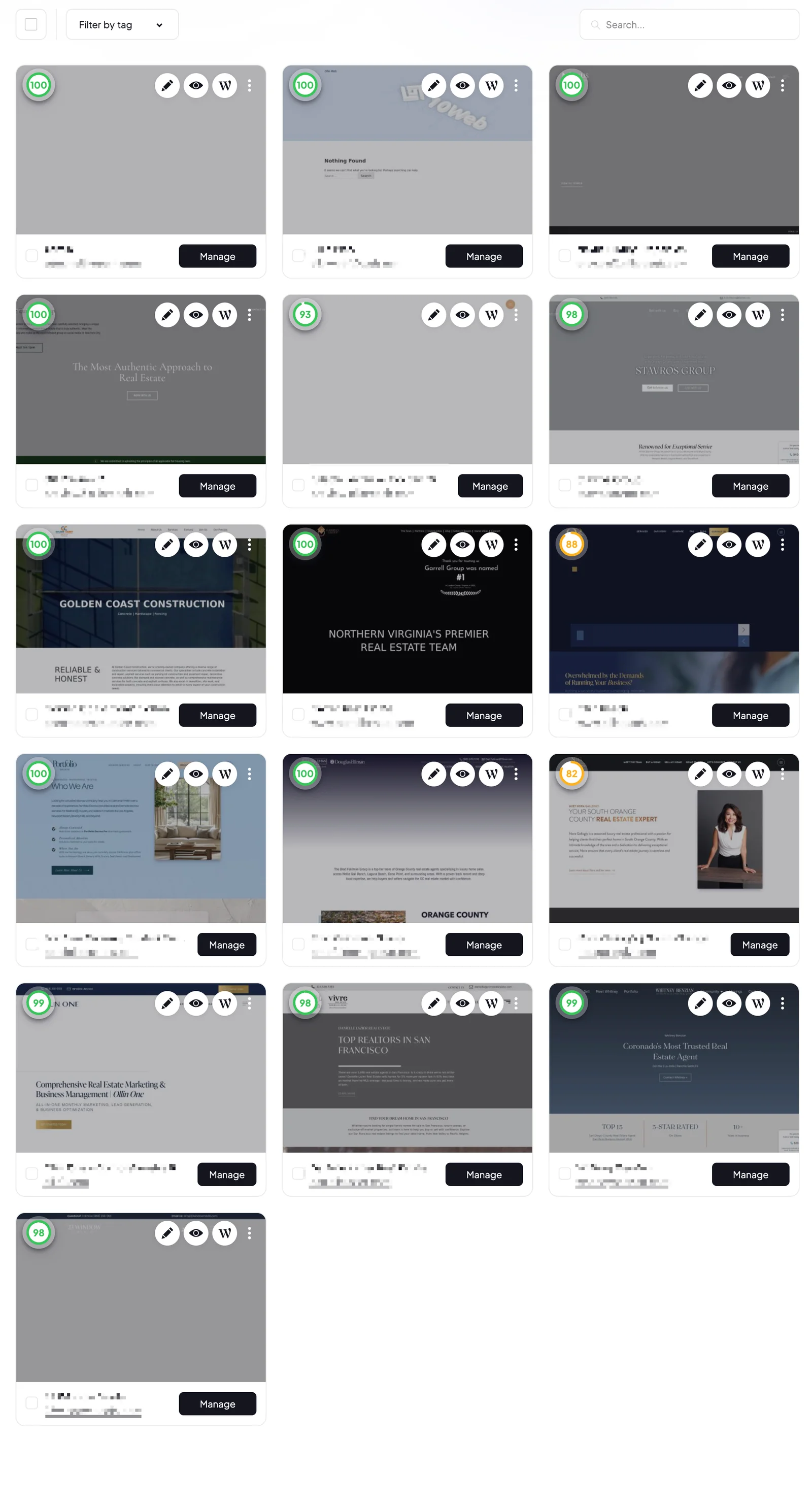
- PageSpeed scores rose from failing grades (sub-50) to 90-100 across all 16+ rebuilt sites
- Core Web Vitals passed on every property
- Plugin bloat reduced through custom lightweight replacements
- Sites became easier to extend with new content and features without breaking
Built to Grow
The Oxygen Builder foundation scales cleanly. New client sites can be spun up from a proven base template. Content editors can add pages without worrying about theme conflicts. The agency no longer treats performance as a reactive fire drill; it is now a standard they deliver by default.
If your sites are failing Core Web Vitals and you are tired of explaining slow load times to clients, the problem is usually not the content. It is the foundation. I audit, rebuild, and prove the difference with numbers that show up in Search Console. Let me look at your slowest site and tell you exactly what is weighing it down.